




China Suppliers Low Voltage Withdrawable Switchgear for Factories and Power Distribution Systems
Conditions of use
- The ambient air temperature shall not be higher than +40℃ and not lower than -5℃, and its average temperature within 24 hours shall not be higher than +35℃;
- Relative humidity: in clean air, it doesn’t exceed 50% at a maximum temperature of +40°C; higher relative humidity is allowable at lower temperatures (e.g. 90% at +20°C); however, it should be considered that occasional condensation may occur due to temperature change.
- Altitude shall not exceed 2000m;
- This equipment is suitable for transportation and storage at temperatures ranging from -25℃ to +55℃, and it can reach +70℃ in a short period of time (not exceeding 24 hours). At these extreme temperatures, the equipment should not suffer any irreparable damage and should be able to function normally under normal condition;
- Note: When the above normal service conditions cannot meet the usage requirement, it shall be negotiated between the user and the manufacturer.
- When this equipment is used on offshore oil drilling platforms and nuclear power plants, separate technical agreement should be signed.
Technical parameter
| Rated insulation voltage | AC690V | |
| Rated working voltage | AC400V | |
| Rated current of main busbar | ≤6300A | |
| Rated withstand current of main busbar(1s) | 50kA, 80kA | |
| Rated peak withstand current of main busbar | 105kA, 176kA | |
| Maximum working current of distribution busbar (vertical busbar) | 1000A | |
| Distribution busbar(peak current of vertical busbar) | ||
| Standard type | 105kA(maximum)/0.1s | |
| Enhanced type | 176kA(maximum)/0.1s | |
Protection level
Compliant with IEC529 and DIN40050 standards
When ordering IP54 protection level, it should be negotiated with the manufacturer.
Cabinet structure
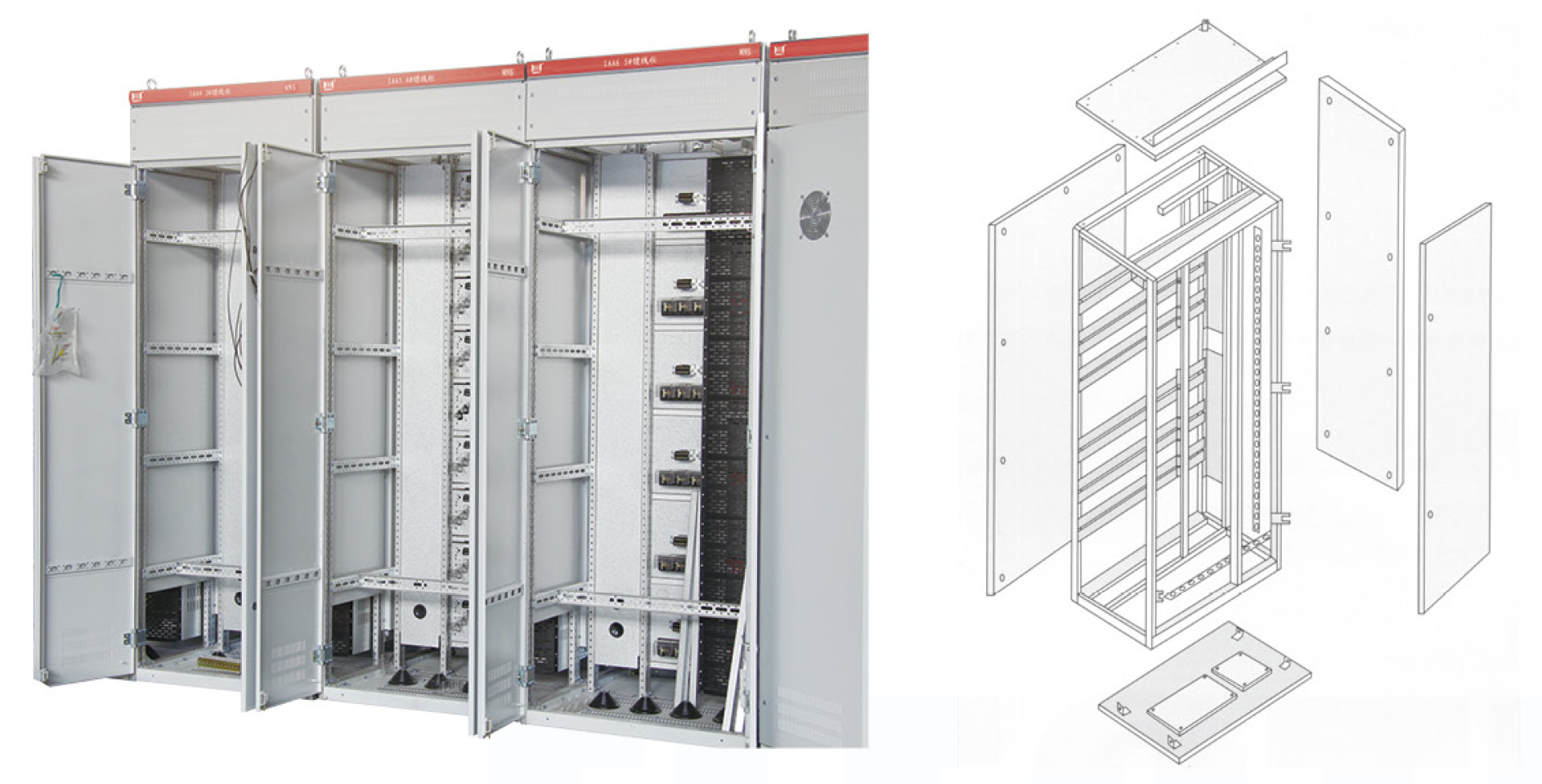
The basic structure of the switchgear cabinet is assembled by C-shaped profiles. C-shaped profiles are made by bending steel plates with E=25mm as the modular installation hole.
All cabinet frames and inner partitions are treated with galvanized purification. The surrounding door panels and side panels are coated with high-voltage electrostatic spraying.
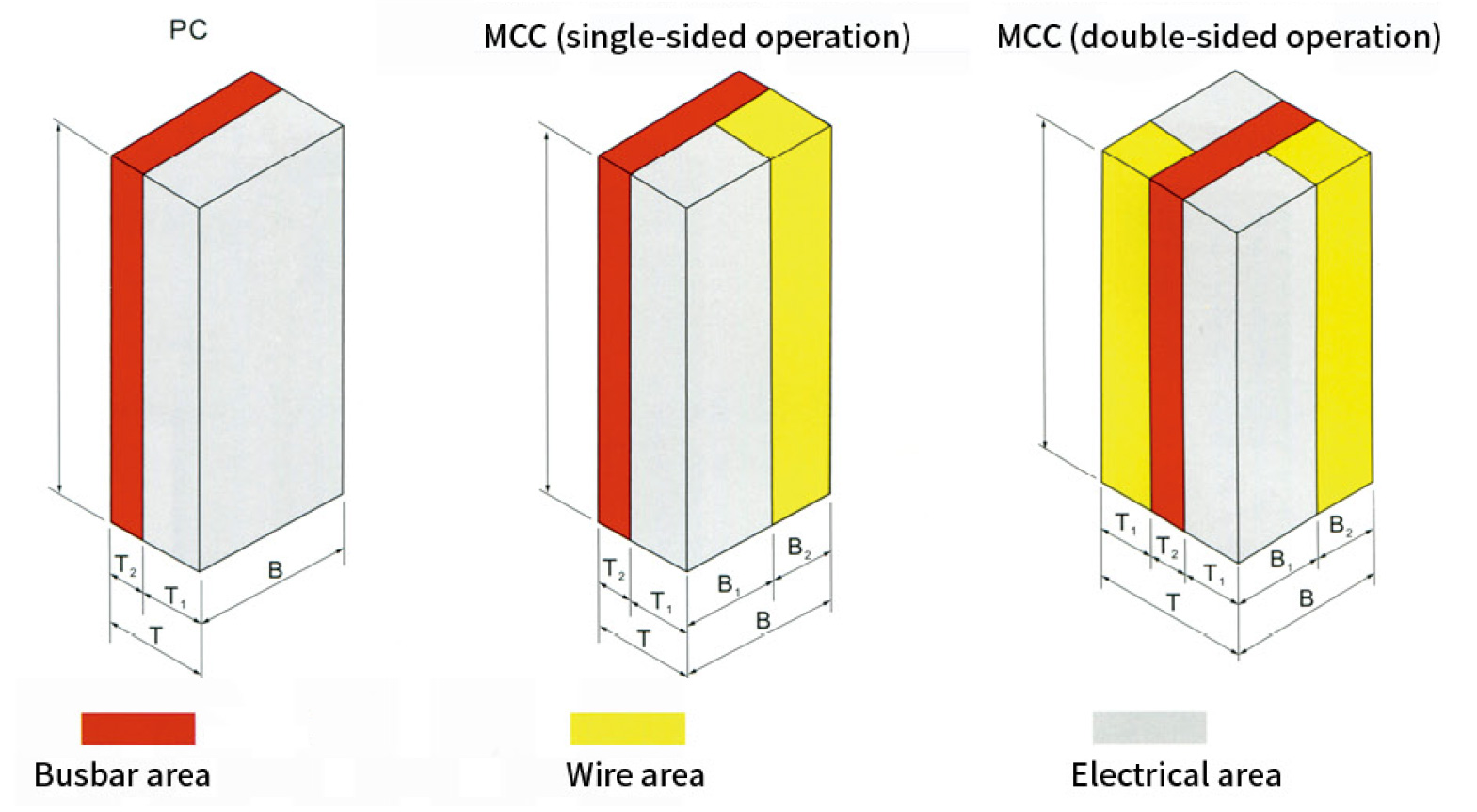
The basic structure of the cabinet is shown in Figure 1: the basic dimensions of the cabinet are shown in Figure 2, Tables 1 and 2.
Switch cabinet type
Power distribution center cabinet (PC): Emax, MT, 3WN, AH, ME series circuit breakers can be used.
Motor control center cabinet (MCC): Assembled from draw-out units of various sizes, the main switch of each circuit adopt high breaking molded case circuit breaker or rotary load switch with fuse, Power factor automatic compensation cabinet (with manual, automatic and remote power factor compensation device).
Cabinet frame structure composed of c-shaped profiles (Figure 1)
Cabinet schematic diagram (Figure 2)
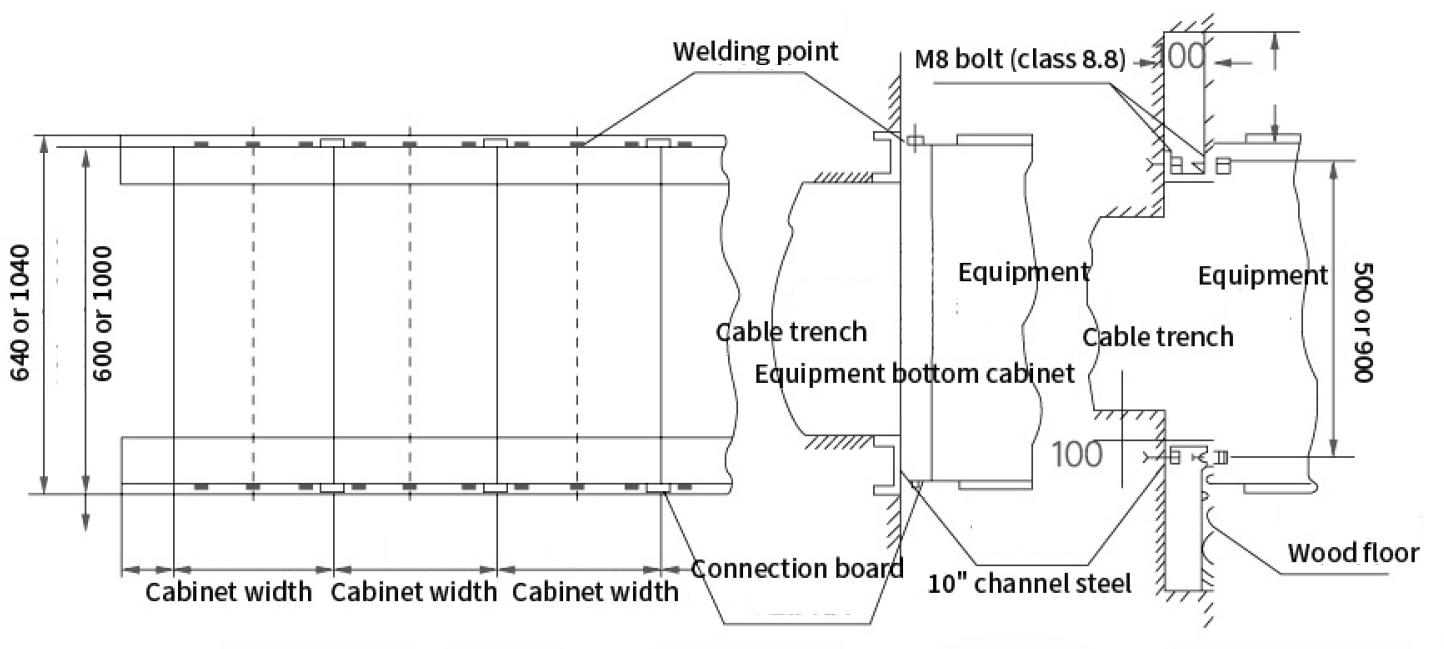
Installation diagram
Solution 1: Welding installation
Solution 2: Bolt installation
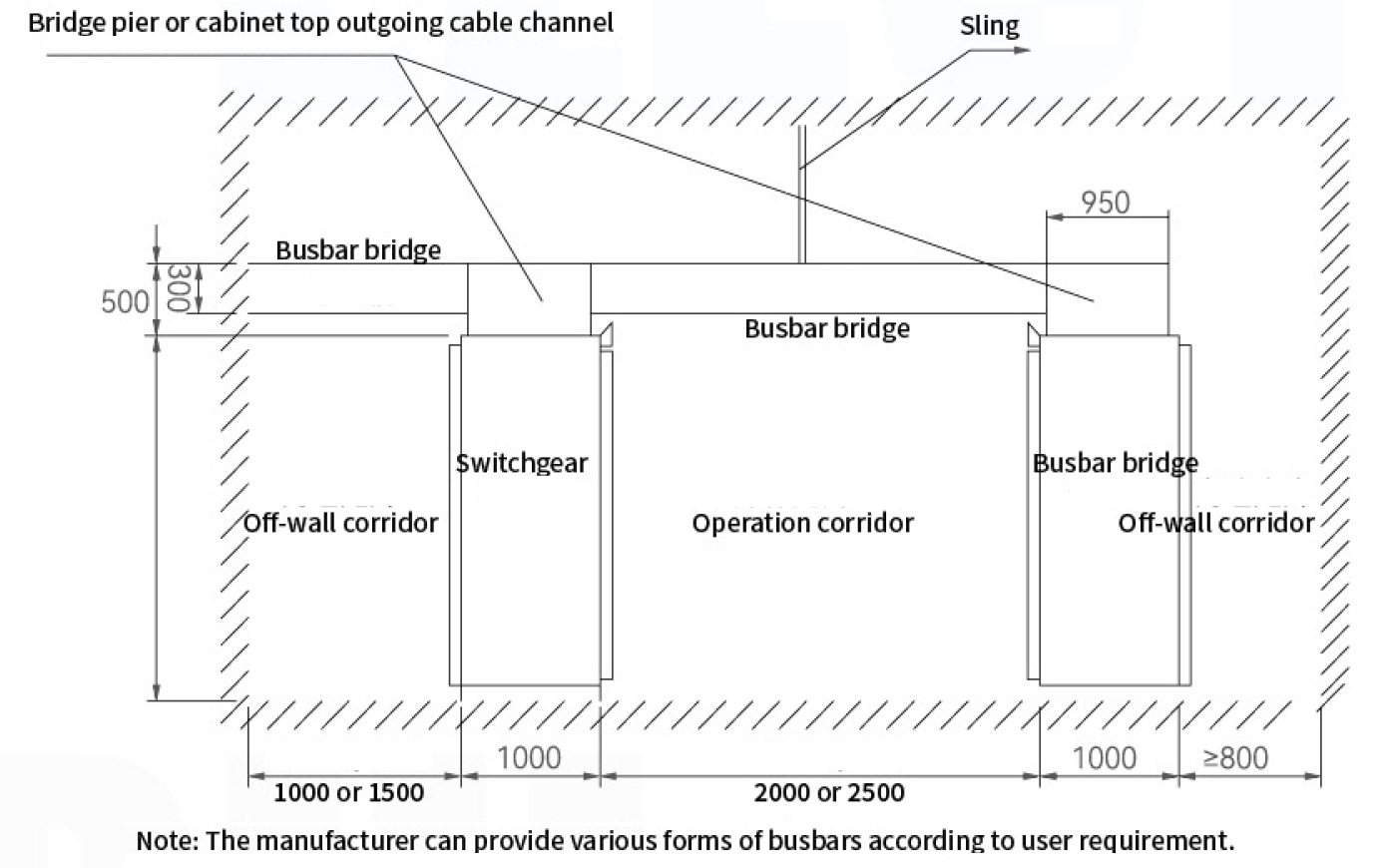
Installation diagram of busbar bridge
Frequently Asked Questions
What are the ambient temperature requirements for operating this switchgear?
The ambient air temperature must remain between -5℃ and +40℃. Additionally, the average temperature over a 24-hour period should not exceed +35℃.
What is the maximum installation altitude for this equipment?
The equipment is designed to operate safely at altitudes that do not exceed a maximum of 2000 meters above sea level.
What are the technical electrical parameters of this switchgear?
The system features a rated insulation voltage of AC690V and a rated working voltage of AC400V. The main busbar supports a rated current up to 6300A, with standard withstand peak currents up to 105kA and enhanced peak currents up to 176kA.
Which protection levels (IP ratings) are available?
The switchgear complies with IEC529 and DIN40050. Standard protection ratings include IP30 (protection for solids >2.5mm) and IP40 (solids >1.0mm). IP54 protection against dust and splashes is also available upon special negotiation with the manufacturer.
Can this equipment be used in extreme environments like nuclear plants or offshore platforms?
Yes, but for applications involving offshore oil drilling platforms or nuclear power plants, a separate technical agreement must be signed between the user and the manufacturer to ensure compliance with specific safety and design requirements.