








Venezuela Has 36 GW of Power Capacity. Less Than 13 GW Is Available.
Venezuela Has 36 GW of Power Capacity. Less Than 13 GW Is Available.
Venezuela’s electricity crisis shows why installed generation capacity can tell a very different story from the power actually available to homes and factories.
On paper, Venezuela has plenty of electricity.
The country has around 36,000 MW of installed generation capacity.
But less than 13,000 MW is currently available.
That gap is now visible in daily life. In some parts of the country, electricity cuts can last as long as 10 hours a day, while factories and businesses are warning that further shortages could hit production and revenue.
Where Did the Other 23 GW Go?
Much of Venezuela’s generation fleet still exists physically.
The problem is that a large part of it cannot operate.
Nearly 90% of the country’s thermal generation capacity is reportedly out of service, following years of underinvestment, equipment deterioration and delayed maintenance.
Fuel-fired plants that should provide an important alternative to hydropower were contributing only around 2,500 MW earlier this year—roughly 13% of their rated capacity.
Installed capacity is not the same as available power.
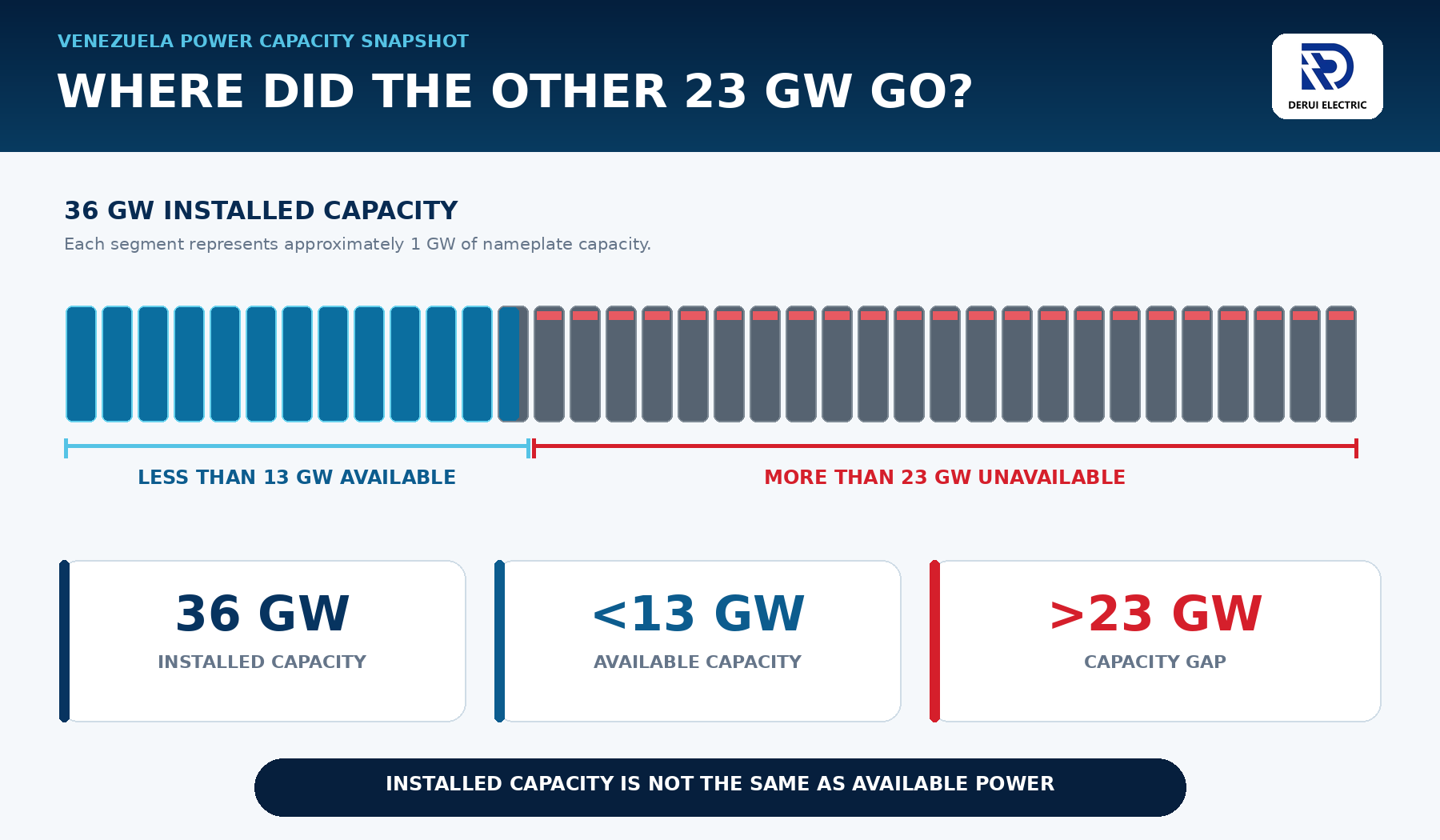
More than 23 GW separates Venezuela’s installed capacity from the electricity currently available to the system.
More Than 80% Now Depends on Hydropower
As thermal generation has declined, Venezuela has become increasingly dependent on hydropower.
More than 80% of available electricity now comes from hydro, much of it linked to the Guri dam system in the south.
That concentration creates another vulnerability: drought.
Now El Niño Is Adding Pressure
Venezuela is preparing for possible drought linked to El Niño, raising concerns over reservoir levels and future hydroelectric output.
The timing is difficult because available generation is already below demand.
Venezuela consumed about 14,700 MW at peak last year. With less than 13,000 MW currently available, the system is already operating with a significant deficit before another major plant failure or a reduction in hydropower.
For industrial users, a long outage can mean idle machinery, interrupted production, damaged materials, delayed orders and additional spending on backup generation.
36 GW Means Little If It Cannot Run
Venezuela is an extreme example, but the lesson applies to power systems everywhere.
A grid cannot be judged simply by the number of megawatts installed.
What matters is how much generation can actually operate when customers need it.
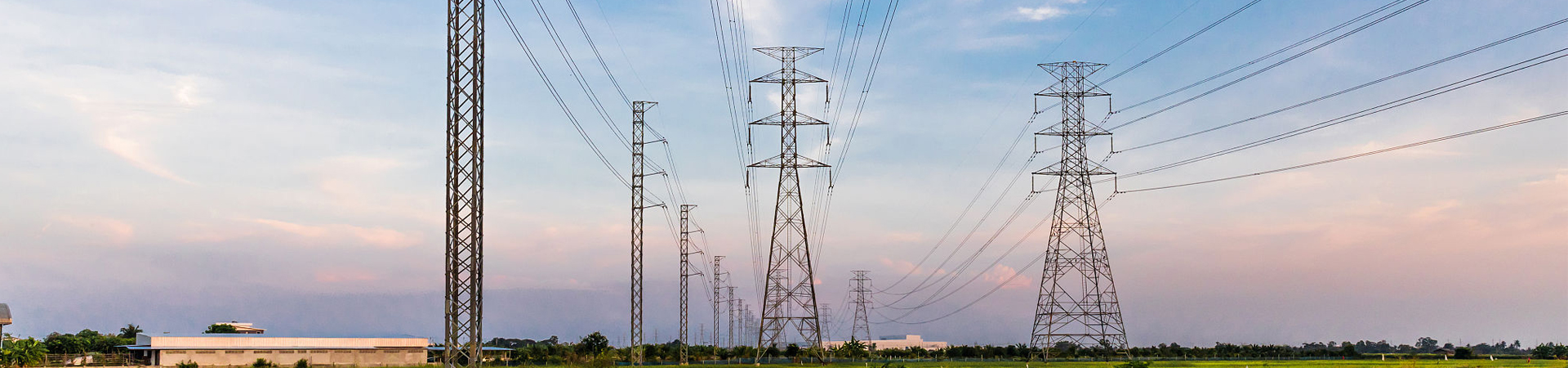
That depends not only on power plants, but also on maintenance, fuel availability, transmission networks, substations, protection systems and the condition of thousands of individual components across the grid.
Can Venezuela Bring Capacity Back?
Venezuela is now trying to recover some of its lost generation.
The government says agreements involving international equipment suppliers and rehabilitation projects could restore several gigawatts of capacity. But repairing generating units is only one part of rebuilding a reliable power system.
The Number That Matters
36,000 MW installed.
Less than 13,000 MW available.
That gap tells the story of Venezuela’s electricity system more clearly than almost any other statistic.
For a factory, the important question is not how much generating capacity exists on paper. It is how much electricity will actually be there when the machines are switched on.
An Industrial Power Perspective
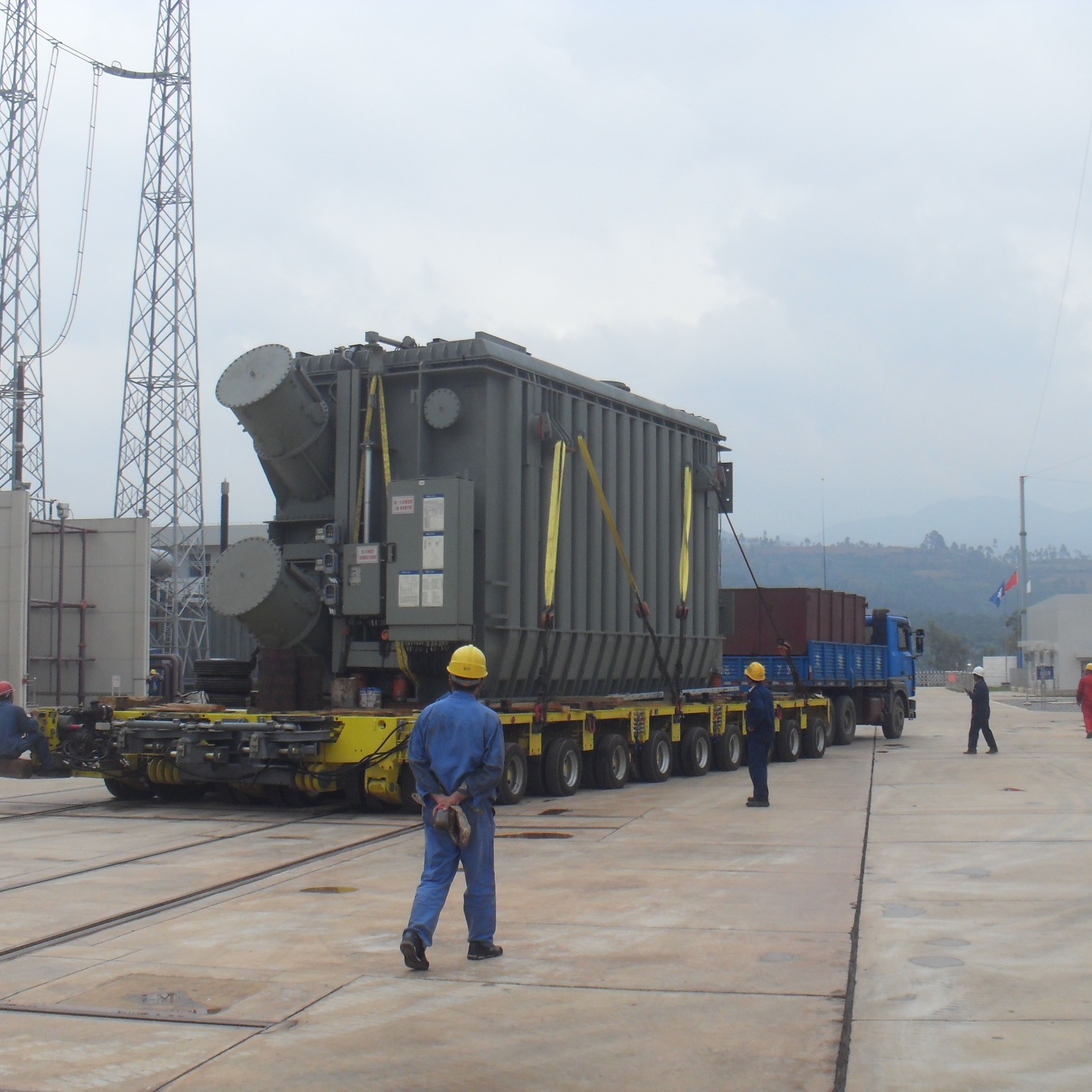
Reliable industrial electricity depends on more than generation alone. Transformers, switchgear, protection systems and distribution equipment all form part of the chain between a power plant and the factory floor.
Derui Electric supplies transformer and switchgear solutions for industrial and distribution projects, with equipment selection based on voltage level, actual load and operating conditions.
Frequently Asked Questions
How much power capacity does Venezuela have?
Venezuela has around 36,000 MW of installed generation capacity, but less than 13,000 MW is currently available.
Why is so much generation unavailable?
A large portion of Venezuela’s thermal generation fleet is out of service after years of limited maintenance, equipment deterioration and underinvestment.
Why is Venezuela vulnerable to drought?
With much of its thermal generation unavailable, Venezuela now relies heavily on hydropower. Lower reservoir levels could therefore reduce the amount of electricity available to the grid.
Planning an Industrial Power Project?
Share your voltage level, load requirements and application. Derui Electric can support transformer and switchgear selection for industrial and distribution projects.
Contact Derui ElectricSources
- Reuters, August 13, 2026: Beaten Venezuelans brace for more severe power, water cuts as El Niño looms
- Reuters, May 4, 2026: Power suppliers hesitate as Venezuela seeks grid repairs