












Kenya’s Renewable Energy Paradox: Why More Solar and Wind Can Raise Grid Costs
Kenya’s Renewable Energy Paradox: Why More Solar and Wind Can Raise Grid Costs
Kenya already operates one of Africa’s most renewable-heavy power systems. Now the rapid growth of wind and solar is raising a harder question: what does cheap generation cost once the entire electricity system has to balance it?
Solar and wind are supposed to make electricity cheaper.
So why is Kenya Power warning that rapid growth in variable renewable energy is increasing the cost and complexity of keeping the grid stable?
On August 11, Kenya Power said wind and solar now account for more than 20% of total grid capacity and can provide around 34% of the electricity mix during peak daytime periods.
The issue is not that renewable electricity has suddenly become expensive. The challenge is that the rest of the power system must respond whenever wind and solar output changes quickly.
Kenya Is Already a Renewable-Heavy Power System
Kenya is not a country just beginning its energy transition.
By the end of 2024, its effective grid-connected capacity stood at around 3,192 MW. Geothermal represented about 29%, hydropower 26%, thermal generation 18%, wind 14%, solar 7% and electricity imports around 6%.
Annual electricity generation reached roughly 13,684 GWh, with renewables contributing approximately 82.99%. Stable geothermal generation has been particularly important in helping Kenya build a relatively low-carbon electricity system.
Kenya’s challenge is no longer simply adding renewable energy. It is managing a power system in which variable renewables have become large enough to affect daily grid operation.
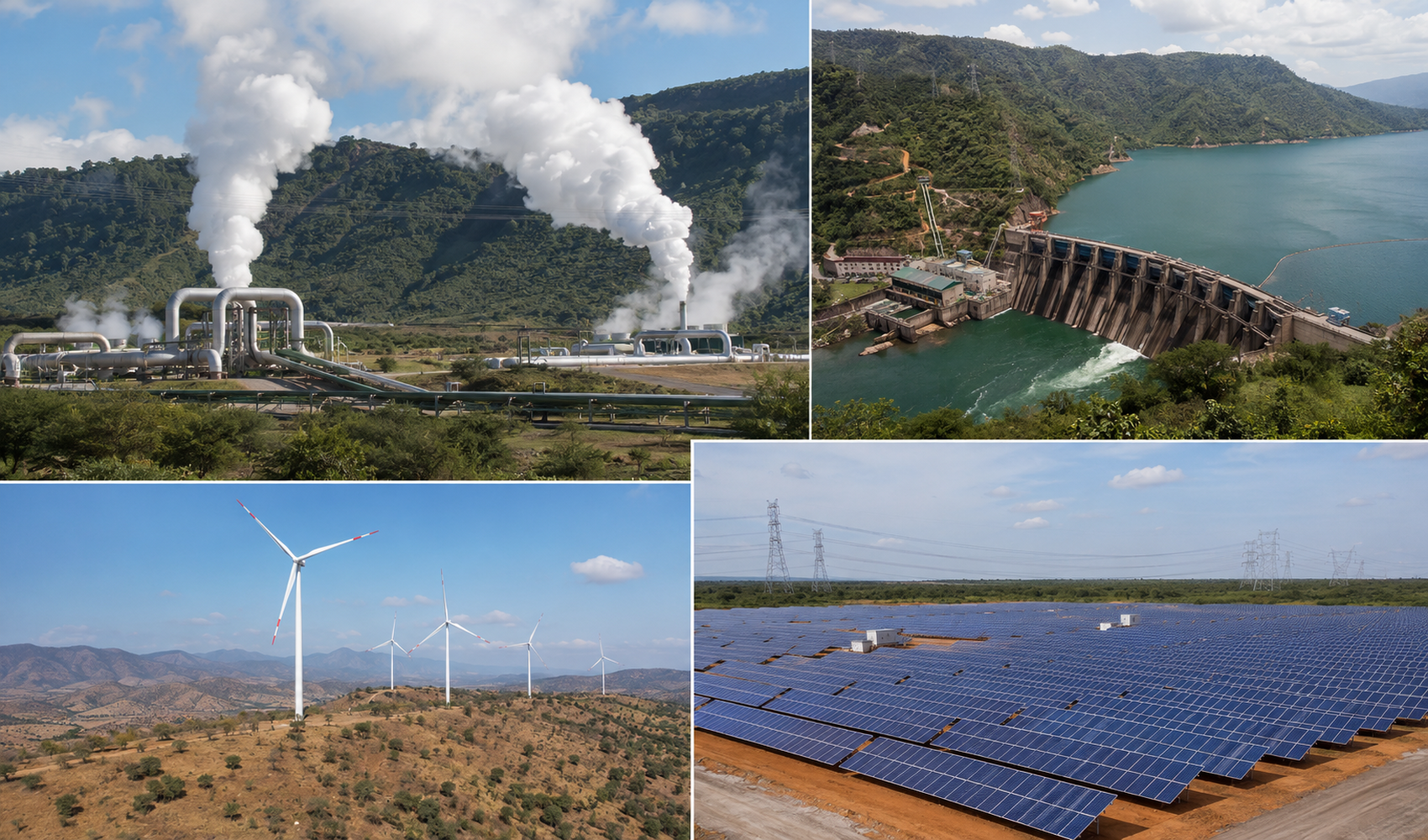
Kenya already obtains the majority of its electricity from renewable sources.
Why 34% During the Day Changes the Equation
The most interesting number in Kenya Power’s warning may not be 20%.
It is 34%.
When wind and solar provide roughly one-third of electricity during a daytime period, sudden changes in weather can become meaningful at system level.
Kenya Power says additional generation may need to be dispatched when renewable output rises or falls unexpectedly in order to maintain grid stability.
A solar plant may produce electricity at a low cost, while the wider system still needs reserves, flexible generation, forecasting and balancing services to deliver reliable electricity every hour of the day.
This does not make solar or wind inherently expensive. It means their value has to be evaluated together with the flexibility required to integrate them.
Kenya’s Contracts Make the Problem More Complicated
Technology is only part of the story.
Kenya Power also operates under power-purchase agreements that include “take-or-pay” obligations.
The utility says this reduces its flexibility because it may retain payment obligations to contracted generators while also paying for other generation needed to balance the electricity system.
That makes Kenya’s challenge partly electrical and partly contractual. A power market designed for one generation mix may need different rules once variable renewable energy reaches a much larger share of supply.
Is Kenya Building Too Much Solar and Wind?
The available evidence does not support that conclusion.
Kenya’s National Energy Compact still plans substantial renewable expansion. Its 2030 targets include approximately 966 MW of wind, 807 MW of solar and 400 MW of battery storage.
The same strategy also acknowledges that variable renewable energy creates grid-stability challenges and that Kenya currently lacks a fully developed regulatory framework for ancillary services such as frequency control and system reserves.
The likely solution is therefore not simply “less renewable energy,” but more flexibility around it:

Higher shares of variable renewable energy increase the importance of storage, flexibility and system balancing.
So Is Renewable Energy Making Electricity More Expensive?
That conclusion would go further than the available evidence supports.
Kenya Power has said that balancing variable wind and solar creates additional operating costs. However, the utility has not publicly disclosed a figure showing exactly how many Kenyan shillings renewable intermittency currently adds to household or business electricity bills.
The available data shows that higher wind and solar penetration is creating additional balancing challenges and operating costs. It does not prove that renewable energy overall is making Kenya’s electricity system more expensive than alternative generation pathways.
The more useful question is how much variable renewable energy a power system can integrate before storage, market design and balancing resources must evolve with it.
Kenya Is Entering the Next Stage of the Energy Transition
Kenya has already demonstrated that an African electricity system can operate with a very high share of renewable generation.
Its next challenge is making the system more flexible as wind and solar become increasingly important during key hours of the day.
Cheap generation and a cheap, reliable electricity system are not exactly the same thing.
An Industry Perspective
As renewable penetration increases, developers and EPC contractors need to evaluate projects as complete power systems rather than isolated generation assets. Storage, protection, voltage control, grid-code compliance and system operating requirements become increasingly important.
For Derui Electric, this means transformer and switchgear engineering should follow the real grid conditions, project voltage levels and operating requirements—not simply the installed renewable capacity.
Frequently Asked Questions
How much of Kenya’s electricity comes from renewable energy?
Renewable sources contributed approximately 82.99% of Kenya’s electricity generation in 2024, with geothermal, hydropower, wind and solar playing major roles.
Why can solar and wind increase grid operating costs?
Variable output can increase the need for reserves, flexible generation, forecasting and other balancing services required to keep electricity supply and demand matched in real time.
Does Kenya have too much renewable energy?
Kenya is still planning additional wind, solar and battery-storage capacity. The current debate is mainly about how the power system, market rules and balancing resources should evolve as variable renewable penetration increases.
Has Kenya Power quantified how much renewables add to electricity bills?
Not in its latest public statement. Kenya Power has identified additional balancing costs, but no precise figure was disclosed showing the direct impact of renewable intermittency on consumer electricity bills.
Planning a Renewable Energy or Distribution Project?
Share your project capacity, voltage levels, grid requirements and installation environment. Derui Electric can support transformer and switchgear selection based on the actual operating conditions of the project.
Contact Derui Electric