Picking out the best Airbreak Switchgears from China isn’t just about comparing prices or glancing at photos in a catalog. You’ve really gotta make sure that the unit fits your installation—matching voltage, current, fault levels, enclosure needs, and your maintenance plan. It’s also super helpful if the supplier can provide clear test records, stable contact performance, safe insulation distances, and easy access for inspections.
David Chen, an independent switchgear application engineer with plenty of field experience in industrial settings, puts it simply: “A solid switchgear choice first protects people, then keeps things running smoothly.” That’s the main principle behind this review. We’re looking at Chinese brands like CHINT, TGOOD, Sieyuan Electric, and Shanghai Huayi Electric, considering their build quality, certifications, customization options, delivery support, and how responsive they are after the sale.
It’s the little details that count. A well-made cabinet should have enough space for cables and clear labels that are easy to read. The door should feel solid when you open it, and the operating handles shouldn’t wobble after you’ve used them a bunch of times—that kind of stuff often reveals how carefully it was made. But let’s be real—no single product is perfect. Something that works great in a factory might not cut it in a humid coastal environment or a dusty mining site.
So, I’m not here to crown one absolute winner. Instead, I want to help you figure out which product fits best for your specific needs. Before placing an order, double-check relevant IEC standards, routine test reports, type-test coverage, and local installation rules. And don’t forget—visiting the factory can really reveal issues that brochures might hide. Sadly, a lot of folks skip that step.
In the end, it’s all about making a practical choice. Reliable Airbreak Switchgears need to be safe, easy to service, verified for performance, and offer good long-term value. Of course, price matters—but it shouldn’t be the only thing you consider.
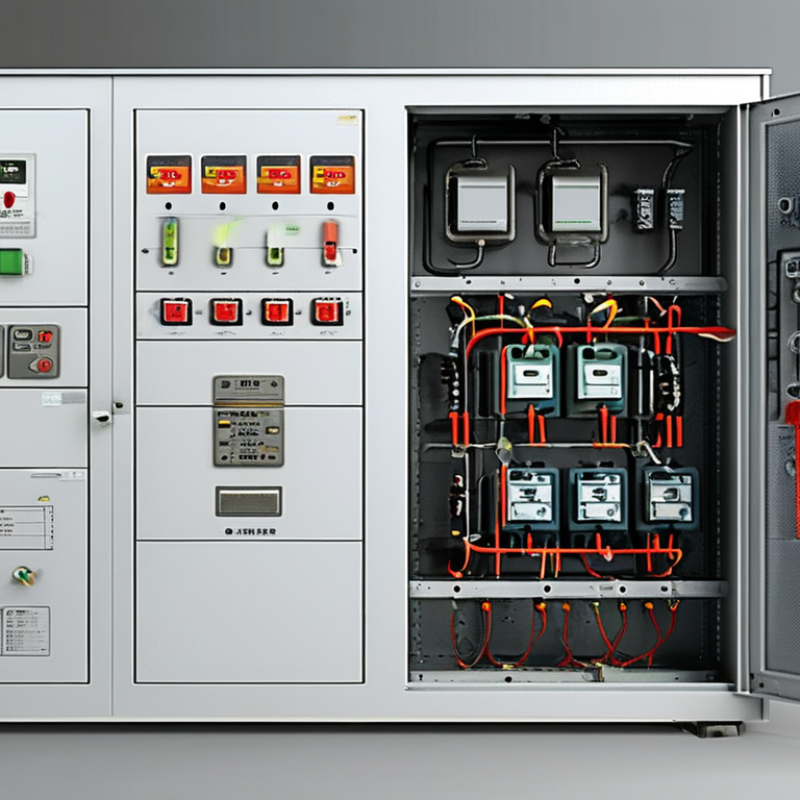
An air-break switchgear uses atmospheric air to extinguish arcs during switching. It protects low-voltage circuits from overloads and short circuits. It also supports isolation, distribution, and controlled maintenance. In practice, the cabinet houses busbars, circuit breakers, disconnectors, and protection devices. Most low-voltage assemblies operate below 1,000 volts AC, following IEC 61439 principles.
The best Chinese air-break switchgear should match the installation, not just the purchase price. Check rated current, short-circuit capacity, Icu and Ics values, temperature-rise tests, IP protection, and internal separation. IEC 60947-2 provides the key framework for low-voltage circuit breakers.
The International Energy Agency reported that global electricity demand may grow by about 3.4% annually from 2024 to 2026. That growth increases pressure on reliable distribution equipment. A weak busbar joint can create heat, noise, and an expensive shutdown. I once focused too heavily on enclosure quality. That was incomplete. Connection design mattered more.
Tips: Request type-test reports, routine-test records, material certificates, and actual factory photographs. Confirm whether testing covers the exact configuration ordered. Ask about spare parts and service response times. Also inspect cable-entry space; cramped terminals slow installation and invite mistakes. Do not accept a high fault rating without checking the full assembly test evidence. Masonry dust, humidity, and poor ventilation can reduce real performance. The catalog rarely shows that.
For 415–690 V systems, the best air-break switchgear starts with verified performance, not appearance. IEC 60947-2 requires clear ratings for operational voltage, frequency, breaking capacity, and service performance. At 50/60 Hz, an air circuit breaker should maintain stable contact pressure during repeated switching. The 690 V rating deserves special attention. Heat rises faster, insulation margins narrow, and cable termination quality becomes critical. Field experience shows that poorly tightened joints can create hot spots within minutes.
Short-circuit capacity up to 100 kA sounds impressive, but the number needs context. It must state Icu and Ics at a specific voltage, power factor, and test condition. IEC 60909 supports prospective fault-current calculations, while IEC 61439-1 and IEC 61439-2 address assembly verification. A 100 kA result at 415 V does not automatically mean 100 kA at 690 V. Check independent laboratory reports, busbar temperature-rise data, and arc-containment details. Do not trust a single catalogue line.
The IEA’s Electricity 2024 report forecasts global electricity demand growth of about 4% annually through 2026. This increases pressure on reliable low-voltage distribution. Chinese suppliers can offer strong value, especially with modular busbars, adjustable trip units, and compact withdrawable designs. Still, comparison work is often incomplete. I would inspect factory acceptance records, enclosure IP ratings, altitude limits, and spare-part support before choosing. The weak point may be documentation, not hardware. That deserves reflection.
Chinese air-break switchgear should be assessed againstIEC 61439 and IEC 60947-2, not appearance alone. IEC 61439 covers the complete low-voltage assembly, including temperature rise, insulation, clearances, and short-circuit performance. IEC 60947-2 applies mainly to circuit breakers, their operating duties, trip units, and endurance. These standards address different parts of the same installation.
In practical inspections, I check the rated current, service voltage, utilization category, and short-circuit withstand rating first. A 3,200 A air circuit breaker needs busbars, joints, and supports designed for that duty. Factory routine verification should confirm wiring, protective bonding, mechanical operation, and dielectric strength. Design verification should include temperature-rise evidence and tested short-circuit arrangements. Small details matter. Loose auxiliary wiring can delay a trip signal.
Reliable suppliers should provide clear test reports, technical drawings, material details, and traceable routine records. Ask whether the tested configuration matches the delivered cabinet. This point is often overlooked. Site conditions also matter, especially altitude, humidity, dust, and ventilation. Protection settings must be coordinated with downstream circuits, not copied from a standard template. One weakness remains common: documents may look complete while installation instructions lack practical detail. Reviewers should question unclear assumptions and request corrective evidence before acceptance.
China’s leading air-break switchgear types include ACBs, distribution panels, and busbar systems. Each serves a different protection and distribution role.
Air circuit breakers, or ACBs, protect high-current feeders and incomers. They offer adjustable trip settings, short-circuit protection, and easier maintenance access. A strong ACB should support IEC 60947-2 requirements and provide clear status indicators. In daily projects, technicians also value front access and stable mechanical interlocking. Small details matter.
Panel systems connect protection devices, meters, and outgoing circuits inside a controlled enclosure. Look for tested assemblies under IEC 61439, suitable temperature ratings, and adequate internal separation. Busbar systems reduce cable congestion and improve heat distribution. However, poor joint torque or insufficient clearance can create dangerous hot spots. The design drawing may look perfect. Installation quality still decides reliability.
The International Energy Agency’s Electricity 2024 report expects global electricity demand to grow by about 3.3% annually through 2026. This growth increases pressure on compact, maintainable low-voltage equipment. Market forecasts also indicate continued expansion in low-Voltage Switchgear, although estimates differ by region and definition. That uncertainty deserves attention.
Tips: Request temperature-rise data, short-circuit test records, routine inspection results, and enclosure protection ratings. Compare copper quality, busbar plating, spare-part access, and service response. Do not select only by purchase price. A cheaper panel can become expensive after one failed connection.
What Are the Best Airbreak Switchgears from China?
When comparing Chinese air-break switchgear, start with Icu and Ics, not the catalogue price. Icu is the ultimate short-circuit breaking capacity. Ics shows how reliably the breaker can operate after a fault. A unit rated 65 kA Icu may offer only 50% Ics. That difference matters in factories with frequent switching demands. Match both values to the calculated prospective fault current at the installation point. Ask for test reports based on IEC 60947-2, not a printed claim alone.
IP rating describes enclosure protection against dust, tools, and water. IP30 may suit a clean indoor control room. IP54 or higher can be more suitable near workshops, moisture, and airborne particles. Still, a high IP number cannot repair poor cable glands or an open door. Check the complete assembly, including busbar joints, ventilation paths, and door seals. Small details often decide long-term reliability.
Mechanical endurance counts unloaded operating cycles. Electrical endurance measures switching under current, so it is usually more demanding. Compare the rated cycle numbers and the test conditions. A strong supplier should provide routine inspection records, serial traceability, and clear maintenance intervals. I would also request a sample inspection before shipment. One imperfect detail deserves attention: published endurance figures may look impressive but hide different test methods. Compare like with like, and record every assumption.
Choosing air-break switchgear from China requires more than comparing cabinet prices. The right unit matches voltage, current, fault level, enclosure rating, and switching frequency. In factories, it can control motors, furnaces, pumps, and conveyor lines. Visible isolation points help technicians confirm safe working conditions. Dusty workshops need sealed enclosures and disciplined cleaning schedules. I have seen small details matter.
For infrastructure, air-break switchgear suits water plants, transport stations, and commercial buildings. It supports feeder coordination and simpler inspection access. Project teams should verify short-circuit test reports, temperature-rise data, wiring diagrams, and spare-part availability. In solar and wind installations, the switchgear can isolate feeders, transformer connections, and auxiliary systems. Outdoor renewable sites need UV-resistant coatings, drainage, heaters, and protection against salt or sand. Grid conditions vary widely. A copied specification can fail.
Data centers demand tight continuity and clear maintenance procedures. Air-break units can serve low-voltage distribution, bypass paths, and generator interfaces. Interlocking prevents unsafe switching between normal and backup supplies. Engineers should check transfer logic, selective coordination, arc-flash energy, and remote monitoring compatibility. Chinese production can offer practical customization, but quality evidence must accompany every claim. Factory inspections, witnessed tests, and traceable component records improve confidence. Yet no checklist replaces a site-specific study.
: Verify 415–690 V operation, 50/60 Hz frequency, rated current, and short-circuit capacity. Numbers need context. Check the voltage behind every rating.
No. A 100 kA result at 415 V may not apply at 690 V. Confirm Icu, Ics, voltage, power factor, and test conditions.
Common types include air circuit breakers, distribution panels, and busbar systems. Each serves a different protection or distribution role.
Review assembly verification, internal separation, temperature ratings, wiring diagrams, and enclosure protection. Installation quality still decides reliability.
It suits factories, water plants, transport stations, commercial buildings, renewable sites, and data centers. The equipment must match the site conditions.
Dusty areas need sealed enclosures and regular cleaning. Outdoor sites may require UV-resistant coatings, drainage, heaters, and salt protection. Conditions vary widely.
Check interlocking, transfer logic, selective coordination, arc-flash energy, and remote monitoring compatibility. Continuity requires clear procedures.
Request temperature-rise data, short-circuit reports, routine inspection records, factory acceptance documents, and spare-part details. Price alone misleads. Documentation may be the weak point.
Poorly tightened joints can create hot spots within minutes. Verify joint torque, insulation clearance, busbar quality, and cable terminations. The drawing can still be perfect.
Airbreak Switchgears are essential low-voltage power distribution solutions that use air as the insulation and interruption medium. Designed for systems commonly rated from 415 to 690 V at 50 or 60 Hz, they provide dependable protection, isolation, and control, with short-circuit capacities reaching up to 100 kA. Chinese air-break switchgear should be evaluated against IEC 61439 for assemblies and IEC 60947-2 for circuit breakers, ensuring suitable safety, performance, and testing standards.
主要 configurations include air circuit breakers (ACBs), low-voltage panels, and integrated busbar systems. When comparing available options, users should examine ultimate and service short-circuit breaking capacities (Icu and Ics), ingress protection ratings, rated current, thermal performance, and mechanical endurance. These systems are suitable for industrial facilities, transportation and public infrastructure, renewable energy installations, and data centers, where reliable distribution, maintainability, scalability, and safe fault handling are critical. Selecting the right configuration requires matching electrical ratings and environmental protection to the project’s operational demands.